Hastening Slowly Through Fall

Forgive my bragging a little, but one reason I enjoy reading Verlyn Klinkenborg’s editorials in the New York Times in a series called “The Country Life,” is that his take on life, his appreciation for growing things, and how he writes about it all is a lot like mine.  I enjoyed the brief article “Hastening Slowly Through Fall,” published a couple of days ago.  The title suggests the writer will dwell on one of the themes of Autumn, time.  He knows the work he must do on the farm, yet feels the pull of the season, inviting him to simply sit and watch it.  Here is a wonderfully written snippet from the article:

Every evening at dusk, five turkeys come down from the woods. They begin as substantial beings — still enough light for that — but soon become shadows, ghosting across the clover and rye, bringing a wildness with them.

I like how he turns a noun into a verb, ghosting, to describe the movement of turkeys, barely seen.  I also like the almost poetic, “bringing a wildness with them.”  If he’d said something like, “The turkeys run around and act wild in the field until it gets dark,” he would have communicated what happened, but not in a way the NYT would likely never publish.

I’d like to think my use and non-use of words is similar to his.  I’d be happy to be able to write like this.  I think I’m moving in that direction.  I enjoy the rhythm and sound of words, arranging them to create a feeling or paint a picture as Klinkenborg does so effectively.  That this essay is New York Times-able, gives me hope.

 

Posted in Autumn, Writing | Tagged , , , , | Leave a comment

Why “To Autumn” Has Been Called One of the Most Perfect Poems In the English Language

I’m going to talk a little about why I have come to love the poem “To Autumn,” why I enjoy reciting it, why it has become pure pleasure letting the words appear beautifully one by one for the benefit of whoever is listening, even if that’s only me.  I want to explain why it has become as important a part of fall as colorful leaves or apples.

Here’s something that amazes me.  This poem follows the rules of a particular, and I think complex, poetic form.  It contains three eleven-line stanzas, each line has ten syllables, plus, it follows a complex rhyme scheme.  That alone is admirable, yet a poet could do all that and still end up with a boring poem that does not move the reader.  That’s not the case with “To Autumn.”  John Keats stayed within the boundaries of this poetic format and yet was able to use words almost magically, painting vivid word pictures and creating sounds I have come to hear almost like music.  For example, the first line, “Season of mists and mellow fruitfulness,” sweetly intersperses m’s and s’s.  Repeat the sentence to yourself, savoring each syllable.  “To Autumn” taught me that poetry involves more than just rhyming but also the sonorous arrangement of sounds.

I’ve been waiting all year to write about my favorite sentence of all time, from among all the sentences I have ever read.  It’s in this poem’s third stanza.  Here it is:  Continue reading

Posted in Autumn, Poem Memorizing Tips and Articles | Tagged , , , , | Leave a comment

To Autumn

John Keats

Season of mists and mellow fruitfulness,
Close bosom-friend of the maturing sun;
Conspiring with him how to load and bless
With fruit the vines that round the thatch-eves run;
To bend with apples the moss’d cottage-trees,
And fill all fruit with ripeness to the core;
To swell the gourd, and plump the hazel shells
With a sweet kernel; to set budding more,
And still more, later flowers for the bees,
Until they think warm days will never cease,
For Summer has o’er-brimm’d their clammy cells.

Who hath not seen thee oft amid thy store?
Sometimes whoever seeks abroad may find
Thee sitting careless on a granary floor,
Thy hair soft-lifted by the winnowing wind;
Or on a half-reap’d furrow sound asleep,
Drows’d with the fume of poppies, while thy hook
Spares the next swath and all its twined flowers:
And sometimes like a gleaner thou dost keep
Steady thy laden head across a brook;
Or by a cyder-press, with patient look,
Thou watchest the last oozings hours by hours.

Where are the songs of Spring? Ay, where are they?
Think not of them, thou hast thy music too,–
While barred clouds bloom the soft-dying day,
And touch the stubble-plains with rosy hue;
Then in a wailful choir the small gnats mourn
Among the river sallows, borne aloft
Or sinking as the light wind lives or dies;
And full-grown lambs loud bleat from hilly bourn;
Hedge-crickets sing; and now with treble soft
The red-breast whistles from a garden-croft;
And gathering swallows twitter in the skies.

Posted in Autumn, Poems Memorized | Tagged , , | Leave a comment

Oktoberfest in Palestine

October, 2005

Hello from Jerusalem,

I went to an Oktoberfest celebration last Saturday.  It had everything you would have expected: good ethnic food, colorful garb, music, dancing, and of course there was plenty of beer from the local brewery.  The only thing is that none of these were German.  Nobody wore lederhosen or dirndls and you couldn’t have found a smidgeon of sauerkraut or a bit of brat.  Even the beer wasn’t German or European or American.  It was all Palestinian.

The village of Taybeh (pronounced Tie-Bay) is about 10 minutes from Ramallah, the seat of Palestinian government in the West Bank.  This small Christian-Palestinian village, the only completely Christian village in the West Bank, has become famous over the last decade because of the small brewery founded there by a group of Palestinian Americans.  The beer, not yet available in the U.S. but exported to Europe and Japan, is actually quite good.  About a month and a half ago I met the owners of the brewery at a social event.  They are nice people, optimistic and gutsy enough to invest their time and money in the area, pursuing their dream of making a world-class product, putting down roots in a politically unstable area in hopes of supporting peace and an eventual nation for the Palestinian people, and providing much needed investment and jobs in the West Bank.  Gutsy indeed!  Besides all the other issues, who would open a factory in a dry, desert-like place to produce a food product in which the main ingredient is water.  In spite of all the potential problems, they have made it work.

Outside the brewery in Taybeh

Continue reading

Posted in Jerusalem Letters | Tagged , , , , , | 1 Comment

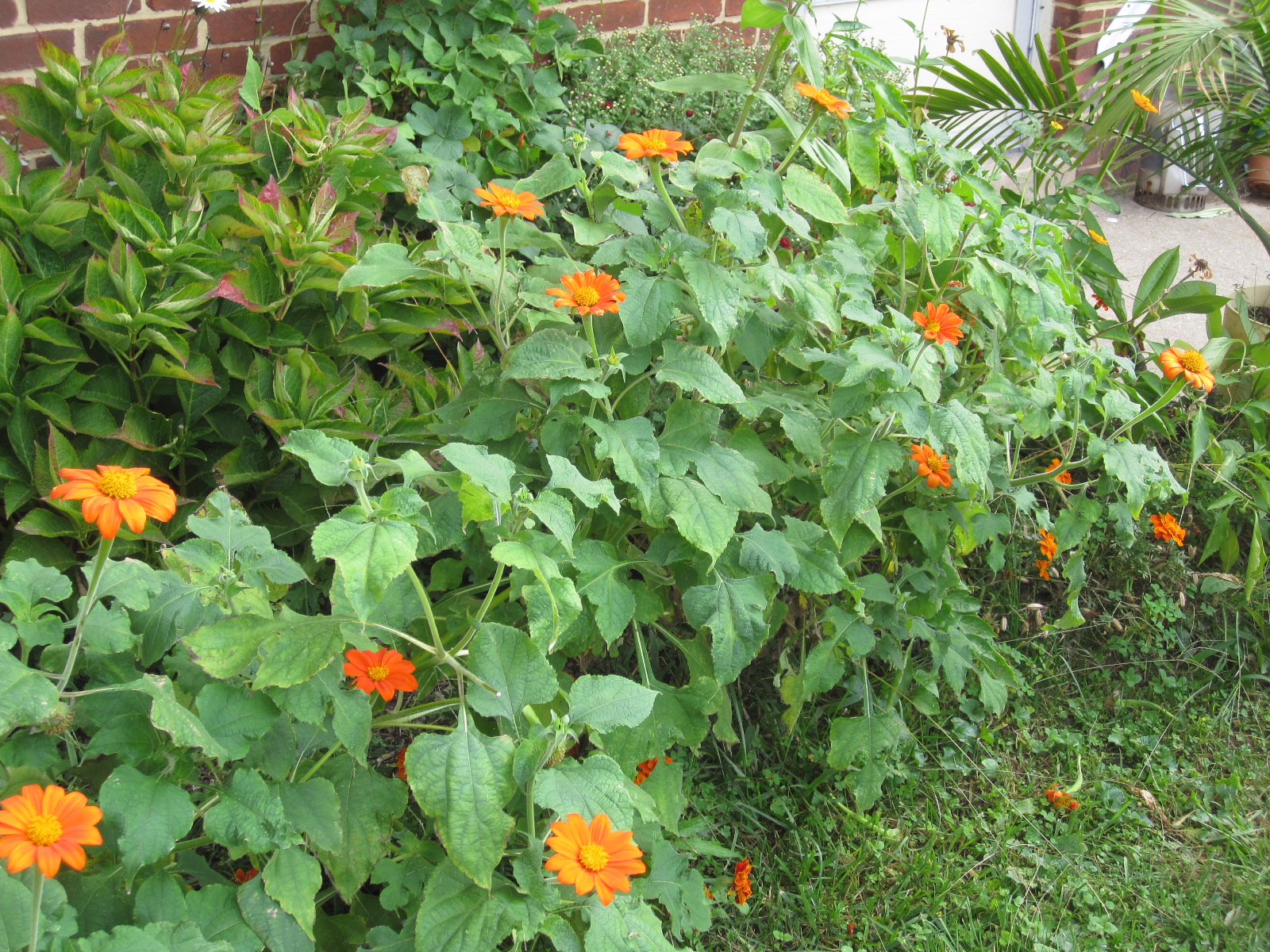
Garden Mystery Solved

Last Christmas my aunt, who works in a garden shop, gave me a brown paper bag full of expired seeds, packets packaged to be sold in 2010.  Never mind that most seeds are viable for two, three, four years and more, the store couldn’t sell last year’s seeds.  Perhaps the percentage that will germinate goes down a little, but most will grow.  I was thrilled she had salvaged so many.  She gave me packets of everything from tomatoes to flowers, an interesting and wide variety.  Though I purchased some fresh seeds to get a particular variety of lettuce of cucumber or squash I wanted to try, I did not need to buy many packets this year.

The Mystery Plant in bloom

In the spring over about four months, I planted probably 200 to 300 seeds in little cells I put under lights.  I imagined I was keeping good notes on what I planted where.  I would draw a long rectangle in my journal, subdivide it like the planting tray, and jot the names of the seeds I had planted in the correct quadrant on the diagram.  I cleverly stuck a toothpick in one corner of the flat (that holds 72 or so cells) so I would know how to orient the tray to the drawing in the journal.  Pretty sharp, huh?  Continue reading

Posted in Garden: A Love Story | Tagged , , , , | Leave a comment

A Weighty Presence I Cherish

I read this in a Wall Street Journal article a few weeks ago:

President Barack Obama sent trade agreements with South Korea, Colombia and Panama to Congress on Monday, capping months of tense negotiations and setting the stage for a heated if brief fight between free-trade advocates and labor unions before the deals’ likely approval.  The 4 p.m. arrival Monday on Capitol Hill of three over-sized envelopes addressed in calligraphy and bearing the president’s wax seal—plus 16 boxes of documents—offers Congress an opportunity to pass the three pacts, plus a related worker-assistance program, by mid-October.

This brief, well-written paragraph describes a unique and important use of real paper and real ink.  The White House sent three large envelopes with papers and sixteen boxes of documents to Congress.  As a fan of actual paper serving us by bearing actual, printed words, I was glad to read it.  I’m not saying I don’t like paper and ink’s virtual versions.  Goodness knows, I spill plenty of cyber ink on reams of cyber paper writing this blog.  I’m just noting that sometimes words, whether we use them for governance or art, need to be borne on something tangible.  Words should have weight in their meaning and sometimes in what carries them.  I find it apt that words from the President, which should almost always be weighty and significant, are even sealed with wax and addressed using calligraphy.

This reminds me, it confirms, really, why I keep an actual journal, a notebook of everything from ideas to essays, tweets to shopping lists.  Real ink and real paper take up space, they have a physical presence, and I think driving a pen across a page takes a little more time than tapping a keyboard.  Sometimes real paper and ink even preserve (at least in my journal; certainly not in legislation sent from the White House to Congress) errors, first drafts and abandoned ideas.  People still use these to record real-life stuff which includes literary strikes and home runs, both.  I think that’s why I like them.  It’s why I write significant verbiage on actual pages as well as these cyber ones, too.

Posted in The Life Literary, Writing | Tagged , , , | Leave a comment

Once Again, It’s All About the Guy

October 15, 2011

I paid my respects at the tomb of the Female Stranger yesterday.  I really should think of a name for her.  I’m coming to believe she deserves more than to be shrouded in the shreds of a rotting veil, shrouded in the mists of time, shrouded, as I think too many women are, in the shadow of their men’s (husbands, fathers, brothers) egos.

I left one of my home-started, six-month-tended mums at the foot of the grave.  It’s the least I could do to honor her memory and express regret for the times my guyness (if it wasn’t a word, it is now) has overshadowed the women in my life.

After writing about her (Rebecca? Felicity? Constance?) yesterday it finally dawned on me how selfish, how Female-Stranger’s-Husband-centered the epitaph is.  We learn that he is disconsolate, that he did everything he could to help and comfort her, that he even tended her body in death.  One telling of the story says that the husband “even sealed the coffin himself.”  After the epitaph recounts what all he did, maybe trying to justify his failures and selfish behaviors, he engraved on the stone one of the most pessimistic, dreary bits of verse, even by epitaph standards, that I’ve ever seen.

How loved how valued, once, avails thee not
to whom related or by whom begot.
A heap of dust alone remains of thee,
‘Tis all thou art, and all the proud shall be.

It doesn’t matter how much love there was, how much filial respect, the end will be a pile of dust.  It actually contradicts the note of hope expressed in the verse from Acts quoted at the end of the epitaph.  For someone with a faith in Something Bigger than any one person, whether God, Love, Goodness, Charity, the idea that the Bigger Thing is at death all for nothing, is fairly faithless.

Instead of justifying himself and lamenting his pain and hopelessness, I wish he had written this epitaph, instead:

She was long-suffering and faithful,
Always wore a smile.
Generous of  spirit and tolerant of others,
She loved God and and loved the people He put in her life.
We will miss her.”

But then if he’d written that, we’d probably know her name.  Maybe I’m on to something here.  Perhaps this is the start of my own telling of the Mystery of the Female Stranger.

Posted in Life, Word Collections | Tagged , , , | Leave a comment

Female Stranger

Some epitaphs are lengthy and give an unusually large amount of information for being on a tombstone.  This is true of the sentences carved into the stone that marks the Female Stranger’s grave.  This tomb is almost a tourist site, part of the colonial heritage of Alexandria, Virginia where we live.  I suspect many people visit it.  I happened to discover it on October 14, 2007, the exact anniversary of the Female Stranger’s death.  Here’s what I wrote at the time, followed by the sad tale told on the stone:

This epitaph is on a grave-sized stone that lies horizontally on six legs, like a table.  When I stopped there I found a slightly wilted but recently fresh bouquet of flowers on the table, and at the eastern or foot end, four large hedge apples and a white, ceramic, one-liter pitcher trimmed in forest green with flowers on the front.  Here are the words engraved on the stone:

To the memory of a
FEMALE STRANGER
Whose mortal sufferings terminated
on the 14th day of October,1816.
Aged 25 years and 8 months.
This stone is placed here by her disconsolate
Husband in whose arms she sighed out her
latest breath and who under God
did his utmost even to soothe the cold,
dead ear of death.
How loved how valued once avails thee not
to whom related or by whom begot
A heap of dust alone remains of thee
Tis all thou art and all the proud shall be.

To him gave all the Prophets witness that through his name
whosoever believeth in him shall receive remission of sins.
Acts 10th Chap. 43rd verse Continue reading

Posted in Whitecaps on the Potomac, Word Collections | Tagged , , , | Leave a comment

Epitaph Collection – Introduction

In Memory of Cordilia N(illegible)
Consort of John (illegible),
Ship Builder
Who departed this life
September, 21, 1810
in the 63rd year of
her age

(from a tombstone in a cemetery in Alexandria, Virginia)

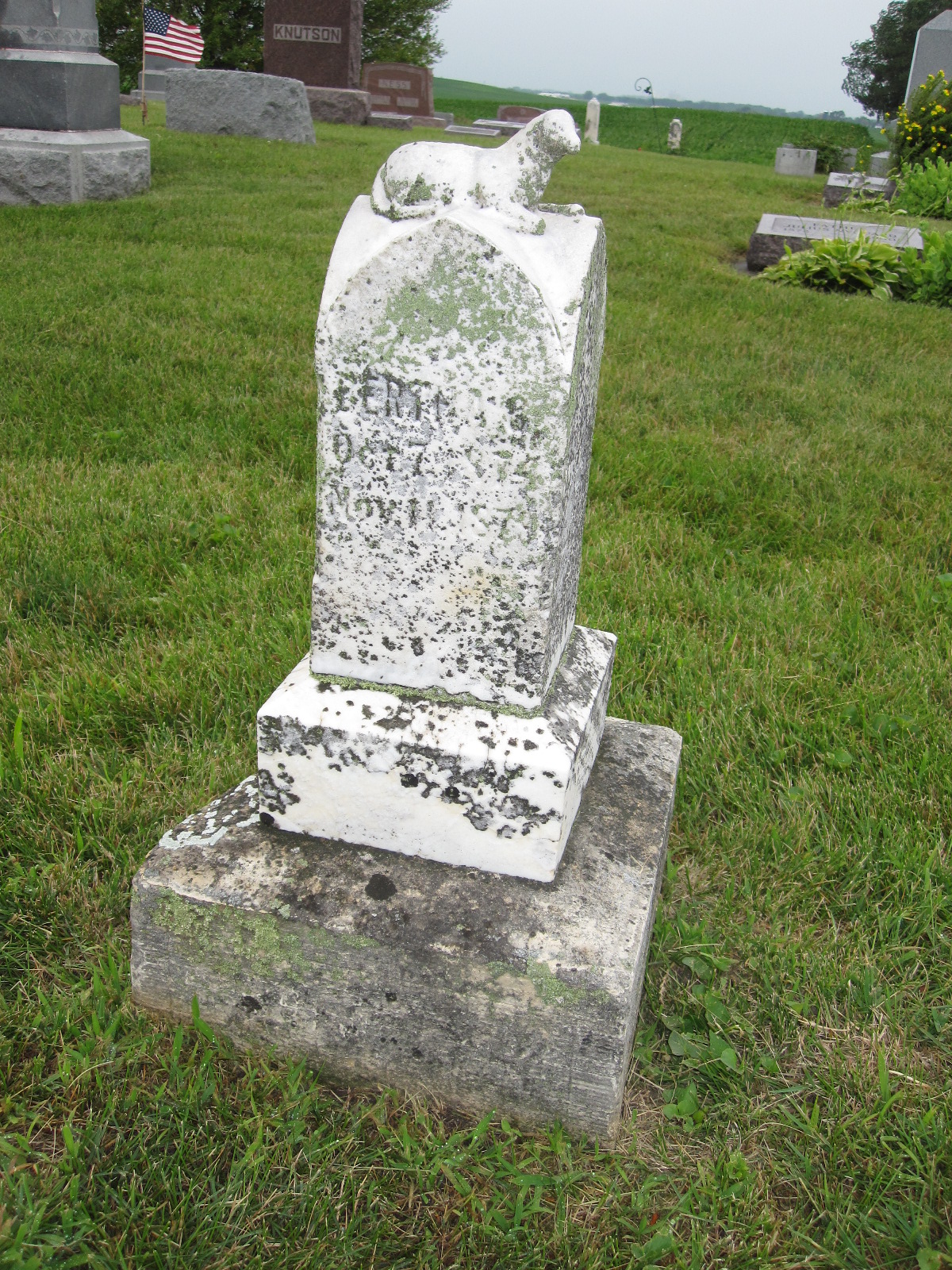
I have long loved walking through cemeteries.  I find them peaceful and strangely life affirming.  Why?  Most graveyards are quiet oases of stillness and tranquility, green lawns, almost pastures really, with lines of decorative stones and bouquets of flowers dotting the landscape.  I especially like older cemeteries with a nice balance of open green space and trees.  Life affirming?  Absolutely!  I like reading the messages on the stones and getting little snapshots of lives lived long ago.  Because epitaphs capture what the surviving family believed to be most important about the person who died, the messages can be positive words about a life well-lived.

A child's tombstone

Continue reading

Posted in Word Collections, Word Play | Tagged , , , , , | Leave a comment

Possible Names for the Apple, Candy Corn and Pretzel Combination

I recently wrote about a unique fall taste treat I like to eat, apples, candy corn and pretzels.  I’ve been coming up with possible names for that combo.  Here is the list so far.  Feel free to add some of your own.

Fall Taste Treat
Fall Delight
Salty Sweet
Sweety Salt (Go ahead!  Reverse those words.)
Wanna Salty Apple Crunch, Sweety?
Apple Crunch
Apple Cream Crunch
Crunchy Apple Cream
Pretzel Cream (Doesn’t anybody else find candy corn creamy?)
Autumn Crunch
Autumn Bite (This is more singular, but the snack I’m trying to name is definitely plural.)
Autumn Bites
Bite ‘O Creamy Crunch
Creamy Apple Crunch
ApPretzCorn (APC?  I don’t think this works.  Corn alone refers to the yellow or white kernels that grow on stalks in fields.) Continue reading

Posted in Autumn, Word Play | Tagged , , , , | Leave a comment